
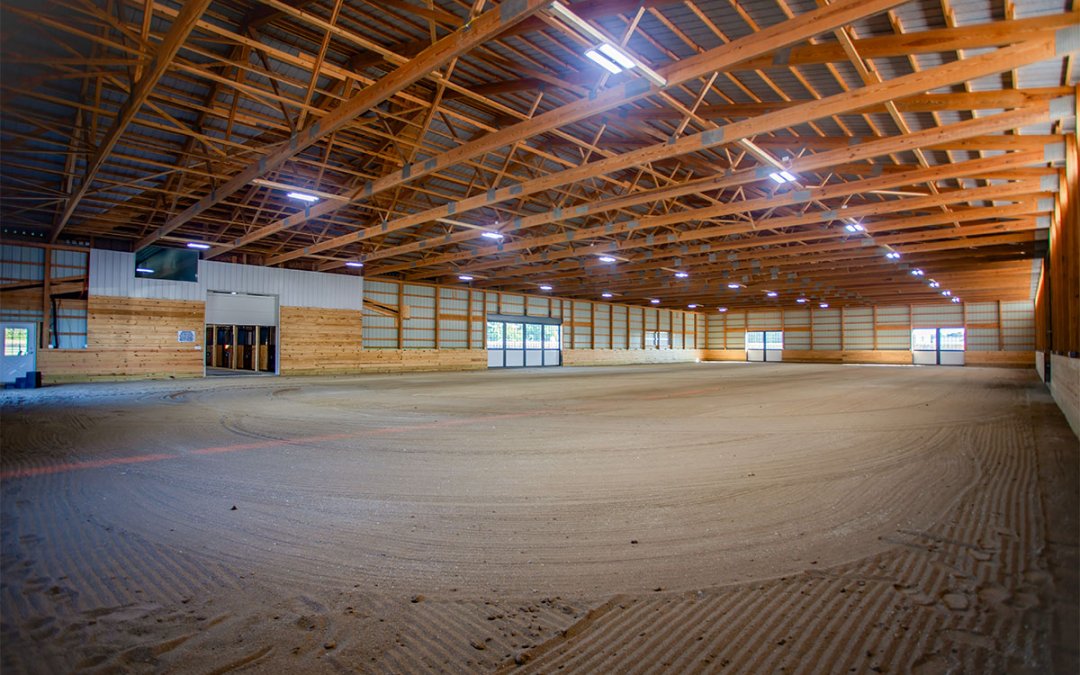
Horse Arena Size: How to Choose the Right Equestrian Riding Arena Dimensions
Determining the right horse arena size is more about answering a practical question than a construction question: how much space do your horses and riders need to ride safely and train well? A custom post-frame equestrian building fits the way you ride and train horses day after day. Sizing the arena based on rider count, lesson traffic, and the work you do inside the building helps determine the best dimensions for your building.
How to Choose Horse Arena Size Based on Daily Use
When we talk through arena size, we start with real daily use. A personal family arena for one or two riders can often work at a smaller scale than a lesson or boarding facility. But you still need enough room to ride comfortably, keep a consistent track on the rail, and circle without crowding.
Lesson programs, boarding barns, and training facilities need more breathing room because the ring becomes a traffic lane. More riders mean more passing and more chances for someone to get boxed in.
A useful planning benchmark we use is to count the maximum number of riders you expect during your busiest hours, not the average day.
Horse Arena Dimensions by Discipline
After we understand daily use, the next question is what type of riding will drive the space.
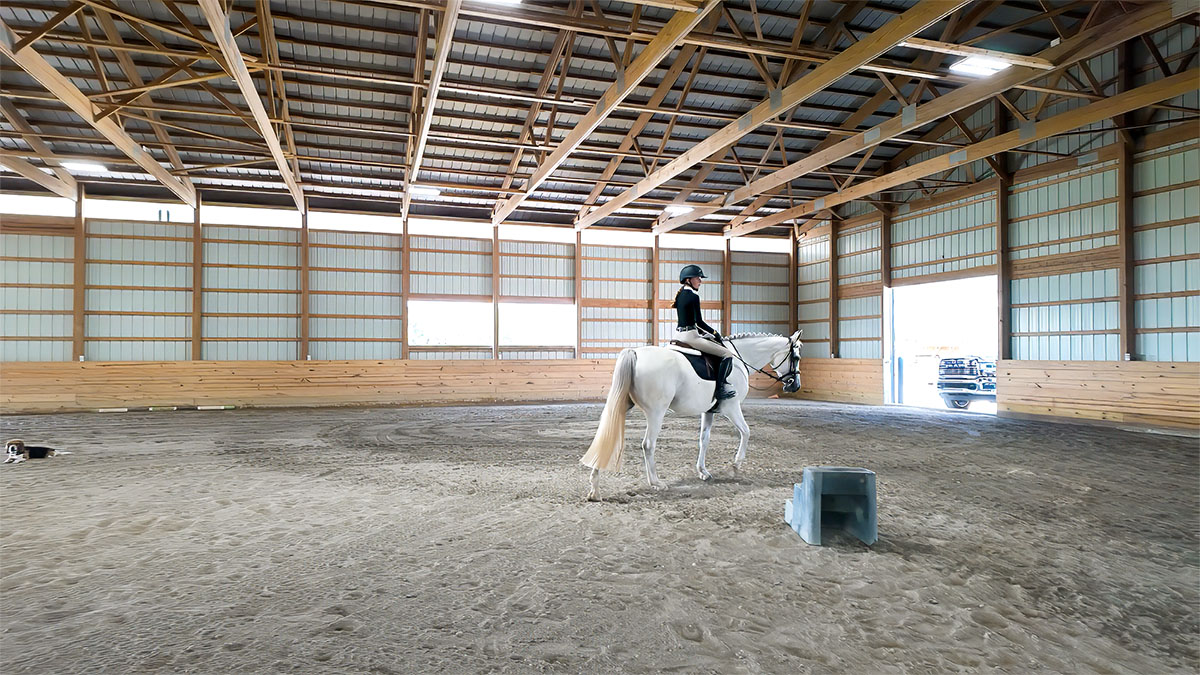
- Western & Reining: A common starting point is 100′ x 200′, with 120′ x 240′ offering more comfortable room for patterns and stopping distance.
- Dressage: A smaller dressage court runs about 66′ x 132′, while a standard court is around 66′ x 198′.
- Hunters & Jumpers: Many programs plan 100′ x 200′ or larger for course flexibility, approach lines, and safe turns.
These are planning ranges, not strict rules. As we work through rider count and traffic flow, the final size may grow or shrink from there.
For general riding and recreational use, 60′ x 120′ works well for flatwork, casual schooling, and light multi-use riding. Once you add multiple riders, mixed disciplines, or lessons, many facilities move toward 80′ x 160′ or larger.
Riding arena width controls how safely riders can pass, how much usable track you have on the rail, and whether the arena feels tight when more than one horse is moving forward at speed. Clear-span post-frame construction keeps interior posts out of the riding area, preserving open space and sightlines.
Indoor Riding Arena Height Requirements
Floor dimensions draw a lot of attention, but wall height also impacts how an equestrian arena rides and feels.
For many indoor arenas, 14 feet is a common minimum starting point for basic flatwork and general riding. Many owners choose 16 feet or more because extra height makes the space feel more open and provides better room for lighting, fans, and speakers without crowding the riding envelope. If you jump, height matters even more. For jumping programs, we typically recommend planning for 16 feet or higher.
Horse Arena Layout Details That Affect Safety & Riding
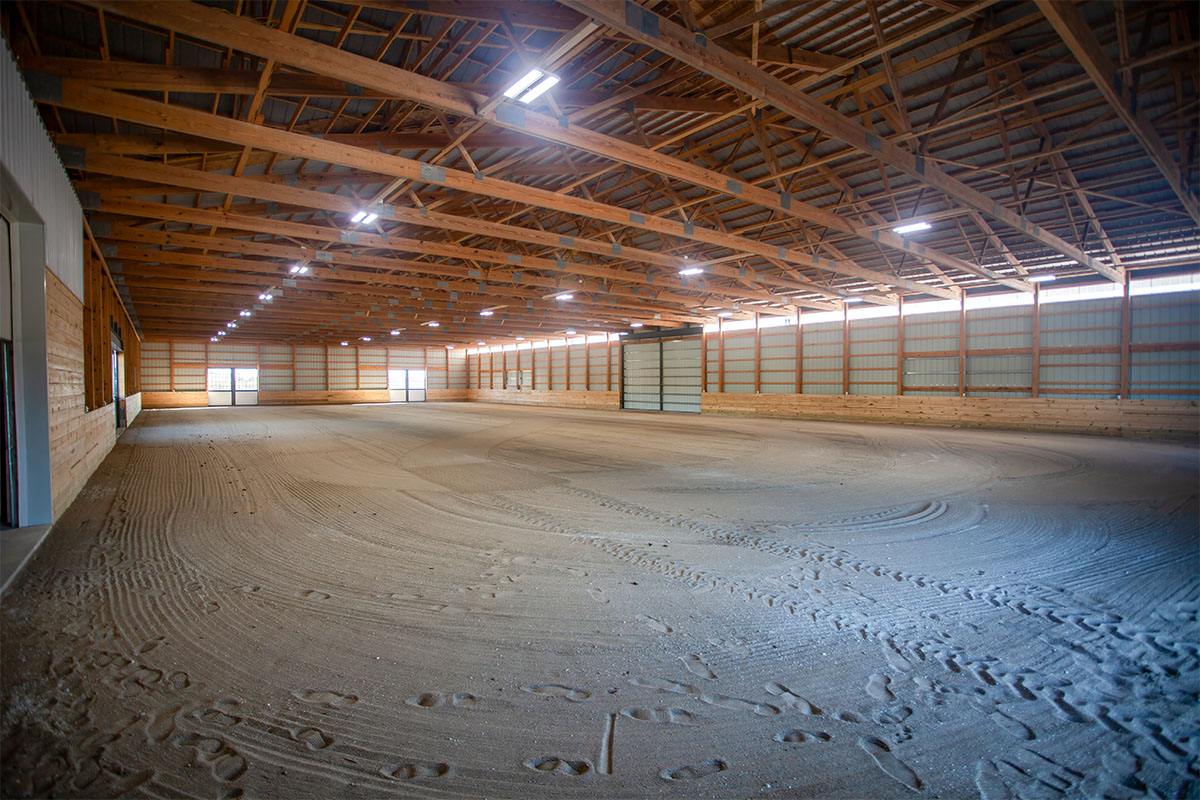
An equestrian riding arena can meet minimum dimensions on paper and still feel tight in real use. Horses need room to move forward confidently, and riders need space to set up lines or patterns without rushing every turn. The right size lowers stress and creates a calmer rhythm for everyone.
Where horses enter and exit the arena affects how much usable space you actually have on the rail. An entry point that dumps directly onto the working track creates conflict during busy hours. We plan entry placement as part of the overall size conversation so the full footprint works the way you need it to. The same thinking applies to how horses stage and move during lessons or training sessions. Dead space in the wrong spot costs you more than the square footage suggests.
Riding Area Spotlight: Watcher’s Run Stables (86′ x 176′)
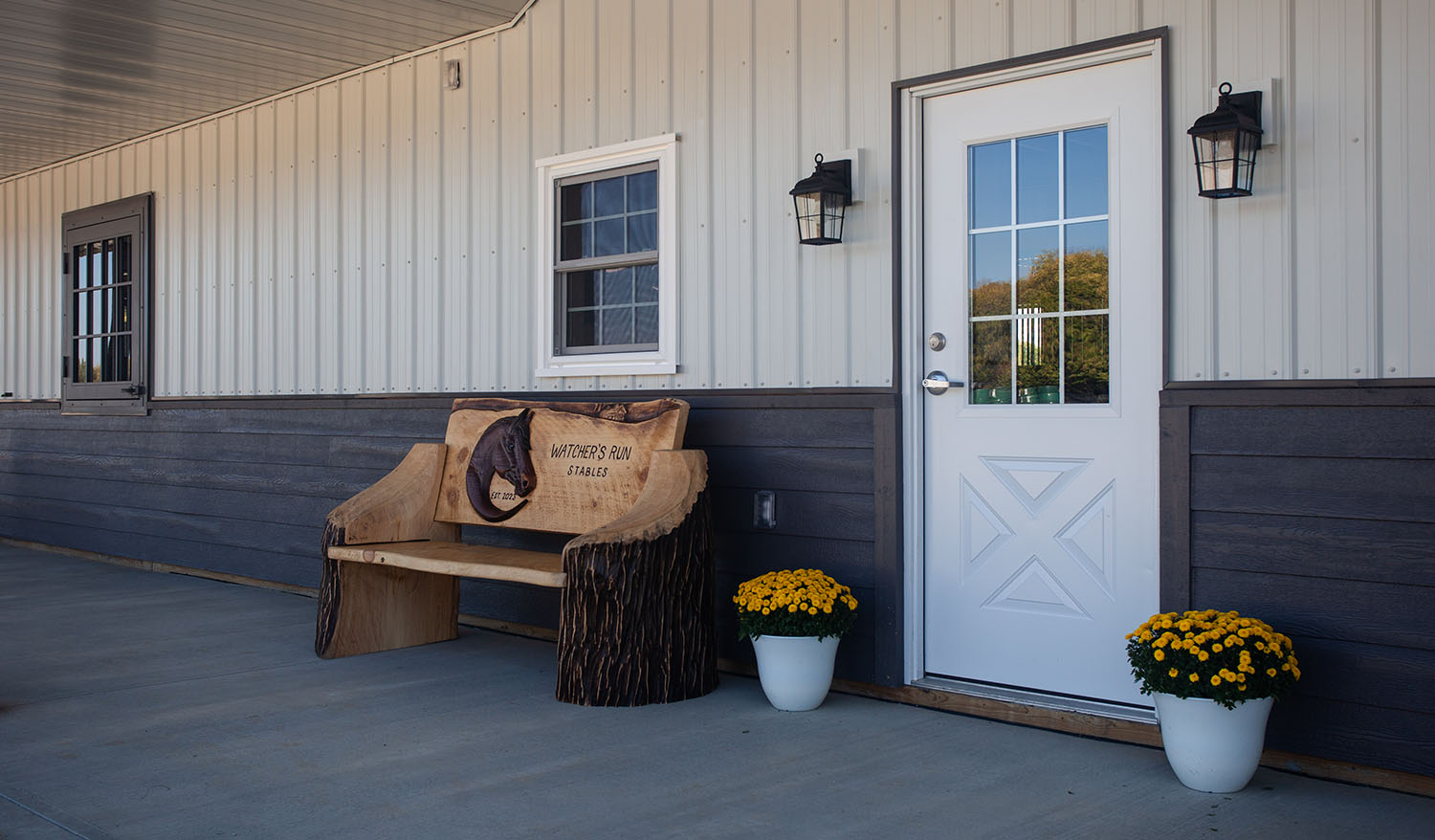
When Brad Boyer and his daughter Rachel planned Watcher’s Run Stables in Noblesville, Indiana, they weren’t building a personal riding space. They were building a business for boarding, training, breeding, and riding lessons.
Brad looked at four different building companies before choosing Meyer Building. He needed a partner who could think through the right arena dimensions for the way the facility would actually be used.
The Boyers chose an 86′ x 176′ indoor arena so multiple riders could use the building at the same time without crowding each other. The goal was daily function and safe traffic flow.
Plan the Right Horse Arena Size with Meyer Building
If you are ready to talk through the right horse arena size for your property, call (260) 565-3274 or reach out online to begin the conversation. You can also try our Cost Estimator tool for a ballpark estimate to start shaping your budget.

