
If you’re searching for machine shed plans, you’re likely trying to figure out the best layout, size, and features to protect your equipment and keep your operation running smoothly. We’ve helped design hundreds of machine shed buildings across the Midwest, and the most successful ones begin with the right questions, not just a blueprint.
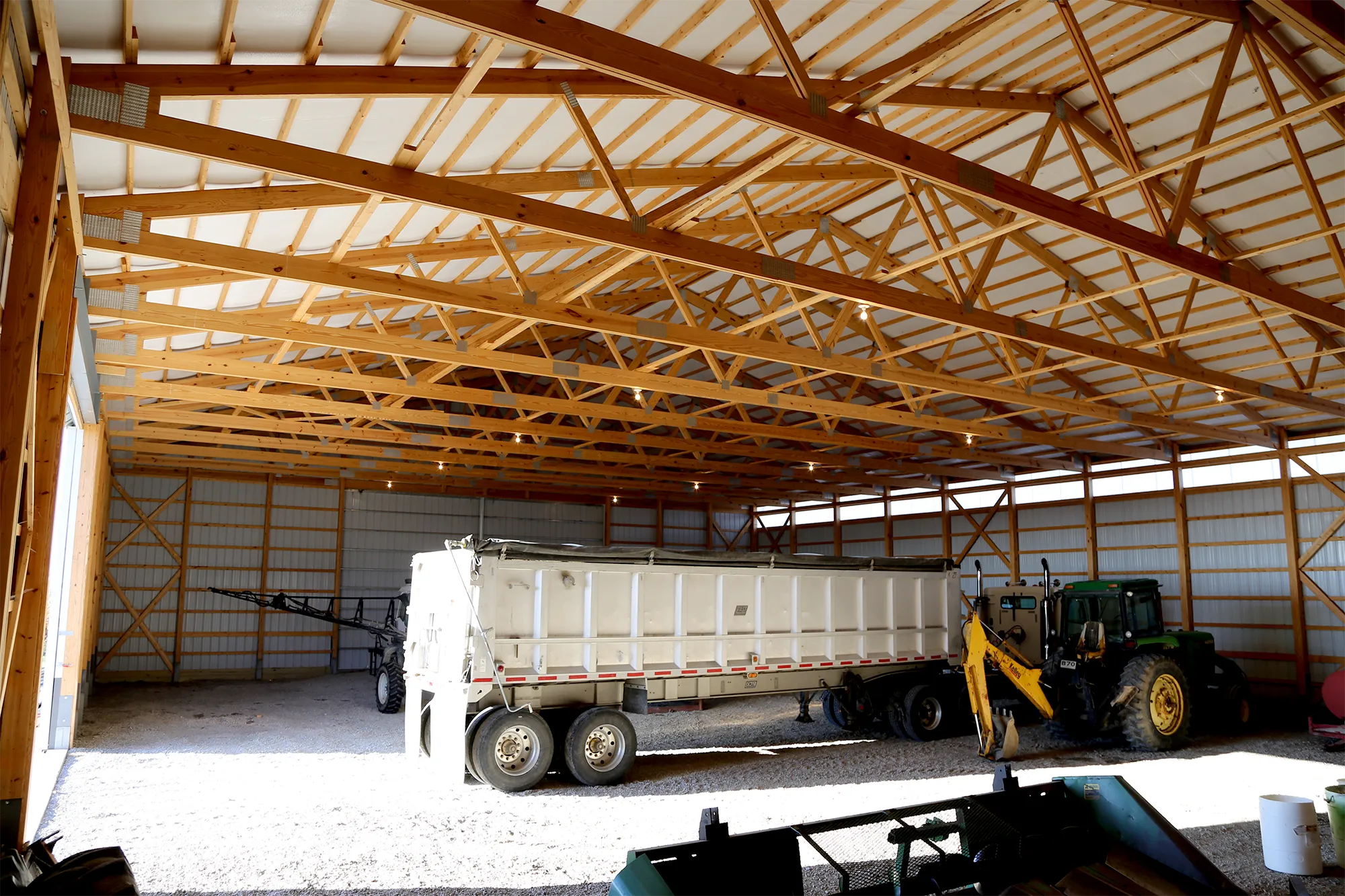
If You’re Starting with Machine Shed Plans, Start Here
The most common mistake in shed planning is underestimating the size of today’s and tomorrow’s equipment. Machines are getting taller, longer, and wider. The equipment lineup that fits your operation today may change within five years, and your building needs to keep up.
Key considerations:
- Combine height and sprayer booms: Plan for at least 16- to 20-foot wall height with 6 to 12 inches of clearance above your tallest equipment.
- Header width and turning radius: Interior layouts should allow movement without having to shuffle machines around.
- Semi-truck or grain trailer storage: Drive-through bays or side-by-side parking options reduce wasted time and space.
Designing to fit your current fleet with additional clearance often costs less than modifying a building later.
Avoiding Traffic Jams Inside the Shed
A good layout doesn’t just store equipment; it improves your workflow. Poorly laid-out machine shed plans often lead to tight maneuvering, wasted fuel, and even equipment damage.
What to plan for:
- Drive-through bays: Simplify entry and exit for large equipment.
- Wide doors and open interiors: Reduce bottlenecks, especially during planting or harvest seasons.
- Tool access and work zones: Keep clear space for inspections, light maintenance, or fueling without moving everything.
If you plan to store seed, tools, or chemical totes, make room in the design for that storage without sacrificing usable floor space.
Getting the Right Doors
Doors are one of the most-used parts of any farm building, and they’re often overlooked in early planning. Size, type, and placement all impact how functional your shed will be.
Common door options:
- Hydraulic doors: Great for large, unobstructed openings.
- Overhead doors: Easy to operate for daily access.
- Sliding doors: Traditional and cost-effective, but slower and more hands-on.
Placement tips:
- Use endwall doors when you want full building-width access.
- Sidewall doors can divide zones or provide extra access points.
Take time to match your door choices to how your equipment flows through the building. You’ll use them hundreds of times each year.
Moisture, Condensation, & Insulation
Condensation is a silent problem in machine sheds. It leads to rust, corrosion, and damage to electrical systems. Whether or not you plan to heat the building, your machine shed plans should include proper ventilation—and, in some cases, insulation.
Recommended strategies:
- Uninsulated shed: Install a condensation control membrane under the metal roofing to stop drips from forming on cold mornings.
- Insulated shed: Do not use a condensation membrane. Instead, focus on a proper insulation system that includes vapor barriers and ventilation.
- Ventilation: Include ridge vents and soffit openings to move moist air out and reduce condensation.
If you’re storing high-value equipment or anything electronic, insulating your machine shed with the right wall and ceiling assemblies adds long-term protection.
Why Custom Machine Shed Plans Make a Difference
Cost is often the first number you look for, but it rarely tells the full story. The real value and the real cost depend on what is included beyond the basic frame and panels.
Here’s what is often not fully accounted for in off-the-shelf or downloadable plans:
- Size and structure: Wider clear spans or taller sidewalls require additional materials and engineering. Generic plans may not reflect the design adjustments needed for your specific site or equipment.
- Doors: Hydraulic and overhead doors are higher-cost components that greatly improve functionality but are not always included in plan estimates.
- Foundation system: Many kits or plans rely on treated wood posts or basic concrete pads, while Meyer Building installs Perma-Column® permanent concrete foundations that improve longevity and stability.
- Electrical and lighting: Plans may show layout ideas but do not typically include wiring, conduit runs, or lighting design.
- Site prep and permits: Every site has unique grading, utility, and zoning requirements. These costs vary widely by county and are often left out of plan-based estimates.
Farmers often come to us after struggling with pre-built or kit-style buildings. Machine shed plans can be a useful starting point, but they rarely anticipate your actual site conditions or usage needs. A Meyer Building design includes those real-world details from the start, helping you plan more accurately and build a shed that performs better and lasts longer.
Let’s Talk Through Your Machine Shed Plans
You may have landed here looking for machine shed plans, and hopefully, now you’re thinking even more about what your farm needs. A well-designed shed protects your investment, saves labor, and keeps your operation moving when every hour counts.
Meyer Building has decades of experience building for Midwest farmers. We don’t sell kits or push one-size-fits-all layouts. We work with you to design a machine shed that fits your farm, your fleet, and your future.
Ready to start planning? Connect with Meyer Building and we’ll talk through your ideas, no pressure.
Common Questions About Machine Shed Plans
How much does a machine shed cost?
Basic machine shed shells may start around $25–$35 per square foot. Final cost depends on size, doors, foundation, and finishes.
Can I prep my own pad?
Yes. Meyer Building does not require you to use our services for pad preparation.
Do I need insulation in my machine shed?
Not always. If you’re not heating the shed and moisture isn’t a major concern, it may not be needed. But insulation improves protection and reduces corrosion over time.
Can I expand my machine shed later?
Yes, if the design allows. Planning for expansion during the initial build is more affordable than modifying a completed structure.
What permits do I need to build?
Most counties and townships require building permits, and some also require zoning approval. We help you through the process.
What’s the best door type for farm sheds?
It depends on how often you use the door and how wide the equipment is. Hydraulic doors offer convenience and clearance for frequent use of large equipment. Sliding doors are popular for large equipment that don’t need frequent access during the day. Overhead doors work well for frequent access when clearance isn’t a limiting factor.