
A Farmer's Guide to Agricultural Post-Frame Buildings
You know your operation. You know what fits, what doesn’t, and what you’ve outgrown. How a post-frame builder can be valuable in the agricultural building process is a different kind of knowledge. We are familiar with what tends to go wrong during the planning phase, where shortcuts show up as problems five years in, and which decisions are easy to reverse (and which aren’t).
This guide covers the four agricultural building types Meyer Building builds most: machine sheds and cold storage, insulated workshops, show barns, and fertilizer storage facilities. For each one, we’ll focus on the planning decisions that have the most downstream consequences and are worth getting right before the design phase.
Post-Frame Machine Sheds & Cold Storage Insights
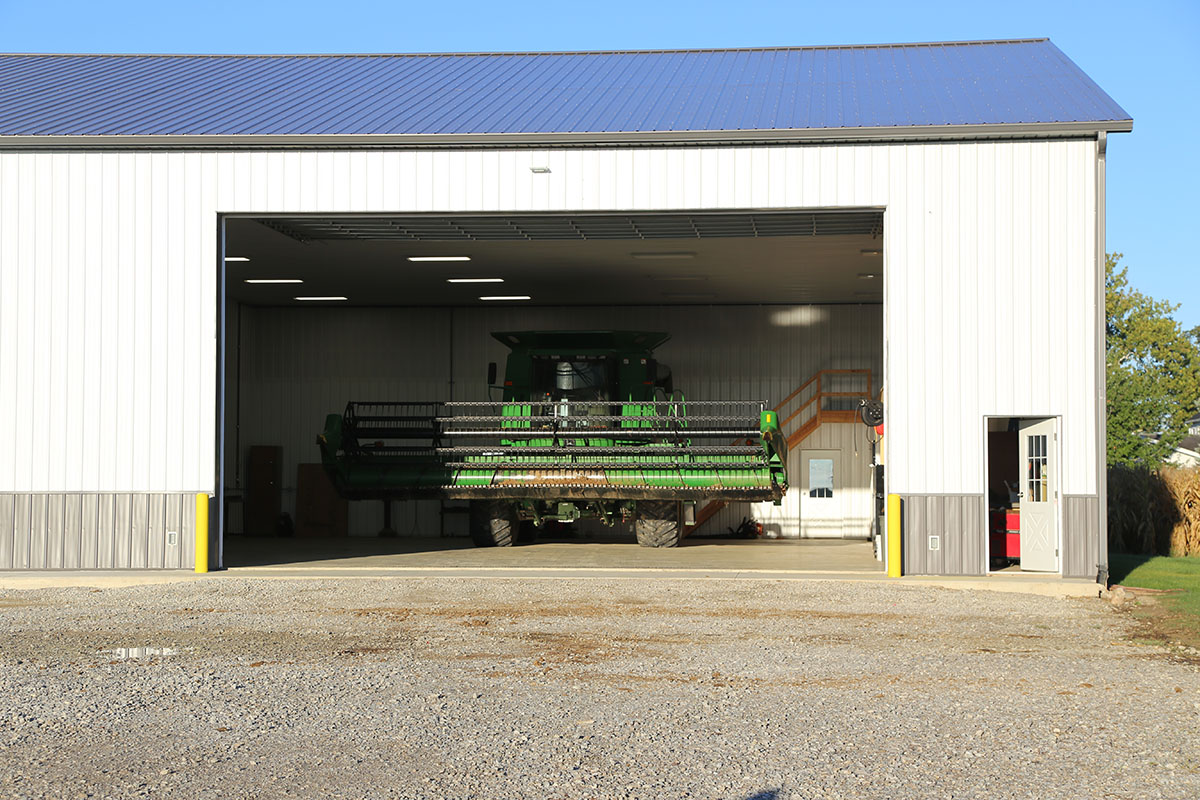
Farmers can quickly outgrow a machine shed built for today’s operation as equipment upgrades and fleets grow. A post-frame builder who has seen these patterns before can help you avoid the most common regrets before they get built in.
Not increasing door height is the most common regret
The most consistent regret we have heard from farmers is not enough door height. Not because they didn’t think about it, but because they sized for current equipment and the next piece of equipment ran taller than expected. A few inches of extra clearance during the build is less expensive than cutting into a finished building to gain those inches later.
Plan traffic flow before locking the layout
A machine shed that forces you to back equipment past other equipment to reach what you need isn’t a storage problem. It’s a layout problem. Drive-through versus pull-in circulation is worth deciding early, because it affects door placement, bay count, and how usable the building actually is during a busy week. Endwall openings give full-width access. Sidewall doors create zones. The right answer for your machine shed depends on how your equipment enters, stages, and exits.
Support space disappears if you don’t plan it
A tool wall, parts storage, or seed room may be a secondary priority until the bays start filling in. If you plan additional accessory space in the layout of your building, the main floor stays open. If you don’t, you’ll claim it from a bay later.
If you’re planning a building that needs to handle multiple functions under one roof, a multi-purpose ag shop design covers how to zone, size, and utility-plan a building that keeps up with your farm operation over time.
Plan the endwall for expansion before you need it
Framing an endwall to allow a future bay addition is a small structural decision during construction and a meaningful cost avoidance later. If there’s any chance the operation grows, it’s worth the conversation with your post-frame builder before the building goes up.
Insulated Workshops Insights

Most insulated workshop problems trace back to decisions made during design. The insulation, the zone separation, and the electrical service can create ongoing problems when they aren’t planned carefully. A post-frame contractor can help you avoid the issues that are most common.
Ensure proper insulation and ventilation
Condensation under roof steel is one of the most common callbacks in post-frame construction. Meyer Building avoids it by getting both elements right from the start: adequate insulation at the ceiling and a properly designed ventilation path from soffit to ridge.
On an insulated building, Meyer Building installs a minimum of 10 inches of cellulose insulation at the ceiling level. At that depth, cellulose creates a thermal barrier substantial enough to prevent condensation from forming on the underside of the roof steel. The ventilation path runs from soffit to ridge without interruption, keeping attic air moving and moisture from building up above the ceiling line.
Size electrical for future potential uses
Workshop electrical needs tend to grow. Adding a welder, a compressor, a lift, or better lighting each increases the electrical load. Sizing the service panel with headroom during construction prevents future hassle coordinating with the utility and potentially pulling new service.
Don’t skip insulating the partition wall between zones
A warm shop bay next to cold storage sounds straightforward until the heating bill shows up. Heat doesn’t stay on the conditioned side of a partition wall unless that wall is detailed the same way as an exterior wall: insulated, air sealed, and continuous. A partition that gets framed and left uninsulated might as well not be there. The heat moves through it, the heating equipment runs harder to compensate, and the cold storage side warms just enough to cause condensation against the exterior steel. It’s one of the details that’s easy to get right during design and expensive to fix after the building is closed in.
Livestock Show Barn Insights
Show barn planning requires more critical decisions to be locked in at the concrete pour phase than most other ag buildings. A post-frame builder familiar with show barn builds can help identify those decisions early.
Be prepared for growth
Before designing the building layout, consider where the operation is now and what size it realistically could be in five years. That answer will drive pen count, room placement, and whether you rough in a cooler now or frame the wall to add one later without tearing into finished space.
Plan the wash area before the concrete gets poured
The wash rack is the hardest space in the barn to fix after the fact. Size and drainage both need to be right before the pour because neither is correctable without tearing out finished concrete.
On sizing, a lot of show barn owners who built at 10×10 wish they had gone bigger. Twelve feet in each direction is a practical minimum. Sixteen feet wide is worth considering if you’re washing larger animals or want room to move without getting cornered. It costs significantly more to correct afterward.
For drainage, the location, slope, pipe routing, and outfall need to be part of the concrete plan from the start. A drain worked out after the pour gets improvised, and improvised drainage in a wash area creates problems that compound over time.
Cooler and feed room placement affects the whole layout
Cooler room placement is hard to change once the building is up. A cooler on the west end fights afternoon sun all summer. East-end or central placement reduces that load. More importantly, the path from the wash rack to the cooler should stay short and direct. In many show barns, animals go back and forth between the rinse rack and cooler several times a day to cool them down and keep working their hair. A cooler at the far end of the barn turns that routine into extra trips past pens, feed, and bedding every time.
Feed and hay storage need the same level of planning. Keep them close enough for chore efficiency, but far enough from wash-down traffic and wet zones to stay clean and dry. If feed, bedding, and supplies end up scattered wherever space is left over, the barn starts working against you. Show barns also need room for the equipment that comes with daily prep and show travel, such as fans, tack, carts, blowers, clippers, sorting panels, and supply bins. If you do not assign that storage space in the layout, it will claim aisles, corners, and pen-side working room later.
Ventilation also belongs in this conversation early. Coolers, feed rooms, hay storage, and livestock areas do not all handle air movement the same way. Moisture, heat, dust, and odor build up fast when those spaces share air without a plan. A builder should think through airflow, separation, and exhaust needs before the room locations are locked.
Feed and storage room access should match the way the barn actually works. If supplies come in by skid steer, loader, or cart, the door openings should make that movement easy and direct. A room that stores the right things but slows every delivery still creates daily friction.
Fertilizer Storage Insights
Fertilizer storage buildings fail in predictable ways when the wrong materials get specified or the concrete plan comes together too late. Both problems can show up years after the building goes up. A post-frame builder experienced with fertilizer facilities knows where those failures typically start and can help you design around them.
Corrosion starts on day one
Dry fertilizer dust settles on everything it touches and accelerates corrosion from the first season. Fasteners, base trim, wall panels, and structural connections in the high-contact zones are the first places it shows up. A building that wasn’t designed for the corrosive environment of fertilizer storage doesn’t fail all at once. It degrades steadily, requires increasing maintenance, and eventually needs renovation work that costs more than building it right the first time would have.
The material choices that matter most are corrosion-resistant fasteners, protected base trim at the floor line, interior wall protection in loader contact zones, and ventilation that manages humidity buildup.
The concrete plan has to lead the layout
Floor thickness, slope, curb details, and containment geometry all affect access, compliance, and how the building actually functions under daily handling. They also need to be resolved before the building layout gets locked, because each one affects the others. A containment geometry that works for your load and unload routine looks different from one that was designed generically and fitted around an existing footprint.
Dry product, liquid fertilizer, and ammonia each have different requirements for containment volume, interior protection, and service clearance. A building designed for one product type and later adapted for another almost always requires retrofits that cost more than planning for the right product from the start.
Traffic flow affects safety, not just efficiency
Wide doors, clear drive lanes, and staging that keeps deliveries and fills from crossing paths matter more during a busy spring than they seem to during the planning phase. When loaders, trucks, and on-foot operators share a tight layout, the consequences of a poorly planned traffic pattern go beyond inconvenience. One predictable movement pattern through the building is worth designing for explicitly.
Checklist for Your First Planning Conversation
These are the topics and questions Meyer Building often covers with you early in the planning process. While you don’t have to have all the answers, it may be helpful to think about them ahead of time.
Your Operation
- What does the building need to do on a normal week, not just its best-case use?
- What is your current setup and where is it falling short?
- Where does congestion or inefficiency show up during your busiest weeks?
- What wet-use routines happen in or near this building?
- What is your tallest and widest equipment, including mirrors and attachments?
- Will you be purchasing more equipment soon? If so, do you know their specifications?
Your Site
- Where on the property is the building going and what is driving that placement?
- How does heavy equipment and delivery traffic currently access that area?
- Where does water drain and where does it sit after a heavy rain?
Your Priorities & Timeline
- When does the building need to be functional?
- Where could the operation realistically be in five years?
- What is the one thing that would make this building feel like a failure two years from now?
Your Building Type
- Machine sheds/cold storage: door height, traffic flow pattern, and support space needs?
- Insulated workshops: which zones need conditioning and electrical load today and likely future load?
- Show barns: pen count, wash rack size, and whether to rough in a cooler now or frame for it later?
- Fertilizer storage: product type, containment requirements, and traffic flow for deliveries and fills?
Start Planning Your Agricultural Post-Frame Building
You deserve a post-frame builder who understands how a farm works. Meyer Building has designed and built agricultural facilities across Northeast Indiana and Northwest Ohio for decades. We bring that experience to every conversation. Let’s talk about your operation, your site, and your timeline, then map a clear plan for an ag building that works for you on day one and holds up for decades.