
Midwest heat, humidity, and deep-freeze winters put buildings to the test. Pole barn insulation helps by reducing cold surfaces where condensation can form, but real moisture control also depends on good ventilation and air sealing. Together, these measures protect equipment and keep your insulated workshop building comfortable.
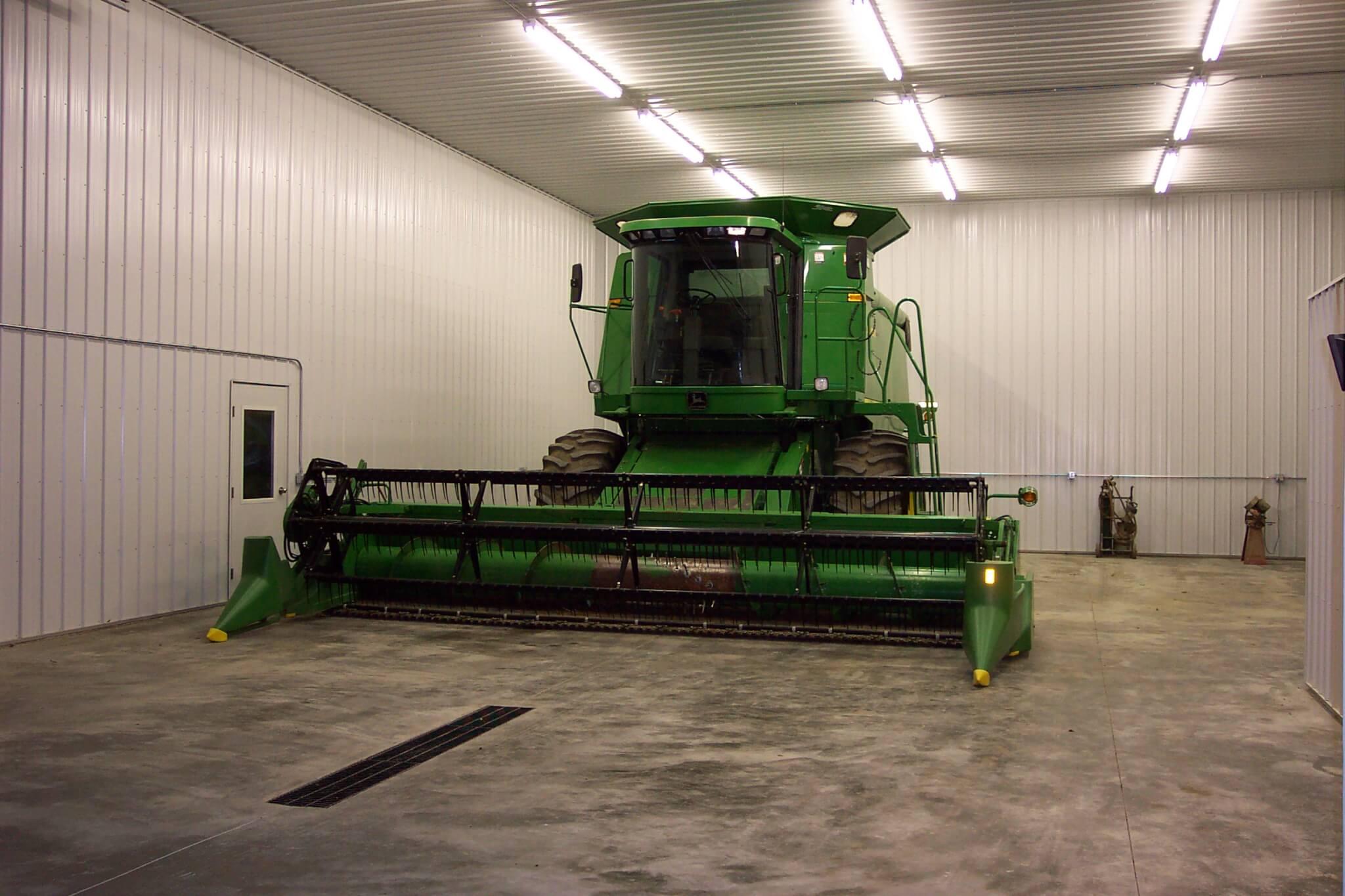
Pole Barn Insulation Questions Midwest Farmers Ask
“Will my insulated shop ‘sweat’ like a cold can in summer heat?”
Condensation forms when warm, humid air hits a colder surface and drops water. In post-frame pole barns and workshops, that often means warm inside air hitting a cold roof panel or hot, humid outside air rushing into a cooled space. The fix includes reducing cold surfaces, controlling indoor humidity, and sealing air leaks so moist air can’t sneak into cold cavities.
“What about drafts and comfort?”
Enhanced comfort begins with air sealing. Drafts waste heat, pull in moisture, and make heaters feel useless. Seal the leaks first so your insulation can perform, and every BTU you pay for sticks around longer.
“Spray foam or fiberglass insulation?”
Either can work when your builder designs the assembly right. Fiberglass batts deliver cost-effective R-value, but require air sealing and a proper vapor strategy to avoid moisture traps. Closed-cell spray foam creates an excellent air and vapor barrier at adequate thicknesses. Farmers can use either in addition to house wrap and a vapor barrier, or employ a hybrid approach—a layer of closed-cell foam to seal and control vapor, plus fiberglass to further boost R-value.
Pole Barn Insulation Strategies with Moisture Control in Mind
Walls
Meyer Building’s standard wall insulation strategies improve comfort and help reduce condensation when paired with proper ventilation and vapor control.
A proven approach begins with installing a barrier layer of house wrap on the exterior that lets the wall dry outward. Setting R19 or R25 fiberglass batts in the wall cavities delivers dependable R-value for cost-effective comfort gains. Finishing with an interior Visqueen vapor barrier adds another layer of protection blocking interior vapor from reaching cold metal.
For workshop and pole barn insulation with enhanced air sealing or higher R-values and heat-flow resistance, there are upgraded wall assembly options available.
Choosing up to 5 inches of open-cell spray foal in the walls can maximize air sealing for a robust R-value without fiberglass batts.
A hybrid approach can add 1 to 2 inches of closed-cell spray foam insulation to the post-frame walls to close gaps, stiffen the assembly, and reduce vapor movement before filling the assembly with fiberglass batts. This combination delivers the best of both worlds: a tight, durable shell and cost-effective insulation depth.
Ceilings
You can experience the most significant comfort gains by prioritizing your post-frame building’s lid.
Rather than spray foam, Meyer Building’s standard ceiling insulation strategy is to use 10 inches of R38 blown-in cellulose and a continuous Visqueen vapor barrier on the warm side. That combination traps heat where you need it most and keeps interior vapor from drifting into cooler attic spaces and ceiling assemblies.
Want even more ceiling insulation efficiency? Upgrading the ceiling insulation depth to 12, 14, or 16 inches of cellulose as desired enhances performance, coverage, and serviceability.
Workshop & Pole Barn Moisture & Condensation Control, Simplified
Pole Barn Roof Ventilation Prevents Condensation
When insulation traps heat, ventilation moves moisture. A continuous soffit intake paired with a continuous ridge vent keeps air flowing under the roof deck so moisture has somewhere to go. If your work adds humidity—from wash bays, snow melt-off, livestock, or intermittent heating—consider mechanical exhaust or a dehumidifier. Think “predictable airflow,” not “crack a window and hope for the best.”
Air Sealing for Better Pole Barn Insulation Performance
Overhead doors, man doors, wall-to-slab joints, and service penetrations create small pathways that add up to major loss. Weatherstrip, caulk, and foam every interruption in the thermal boundary. Many little pinholes equal one big leak.
Managing Ground Moisture in Insulated Pole Barns
Moisture doesn’t just blow in from outside air. It wicks up from the ground below, too. Persistent slab “sweat” in spring and fall often improves with air circulation and intermittent dehumidification, while a perimeter grade beam can help manage ground moisture at the slab edge. It ties your columns together, keeps wood and steel out of the splash zone, and gives door thresholds and base trim a dry, solid bearing. Where needed, slab-edge insulation can help cold-edge condensation. A positive grade away from the building, and drain tile if soils stay wet, will help keep the edge dry year-round.
Avoid Double Vapor Barriers in Pole Barn Insulation
Pick one primary vapor control layer. For example, if you use closed-cell spray foam at sufficient thickness, skip interior poly sheeting. “Sandwiching” insulation between two barriers can trap moisture where you can’t see it.
Pole Barn Insulation FAQs: Farmers’ Common Concerns
Q: What’s the “best” insulation for pole barn or workshop walls?
A: The best insulation is the assembly that fits your post-frame building’s use. A solid starting point includes installing house wrap outside, R19 or R25 fiberglass batts in the cavities, and a Visqueen vapor barrier on the interior. A hybrid approach adding open-cell or closed-cell spray foam maximizes sealing and R-value for the best balance of comfort, cost, and moisture control.
Q: Will insulation make my building “sweat?”
A: Not if you air-seal and ventilate correctly. Condensation spikes when warm, moist air touches colder surfaces. Seal the leaks, use one interior vapor barrier, vent the roof, and manage humidity during wash-downs or intermittent heat.
Q: We only heat the workshop when we’re working—any special tips?
A: Yes. Intermittent heat can drive moisture into cold cavities, raising the stakes on air sealing and ventilation. Effective wall and ceiling insulation strategies keep moisture where it belongs and keep you comfortable when you fire up the heat.
Work with Meyer Building for a Moisture-Free Pole Barn Crafted to Thrive
“Built to last” is just our baseline. Your pole barn should thrive for generations with steady comfort, predictable energy costs, and no mystery drips. The right insulation strategy protects both your building and your investment.
Farmers across Northern Indiana and Ohio trust Meyer Building to design insulation systems around their workflow, climate, and budget. We walk the site, talk through intermittent heat or wash-down routines, and recommend the approach that fits your needs.
Ready to design an insulation and condensation-control plan that actually works? Let’s talk about insulated workshops built to thrive. Call (260) 565-3274 to connect with Meyer Building’s pole barn insulation experts or reach out online today to schedule a consultation.