
Fertilizer isn’t cheap, and poor storage conditions can mean clumping, lost volume, extra labor, or even compliance issues. That’s why many farmers compare a fertilizer storage building vs fabric structure. Both get the product under shelter, but they serve different needs. The best option depends on how much fertilizer you move, how long you plan to use the facility, and whether you want a short-term fix or a structure that can grow with your farm.
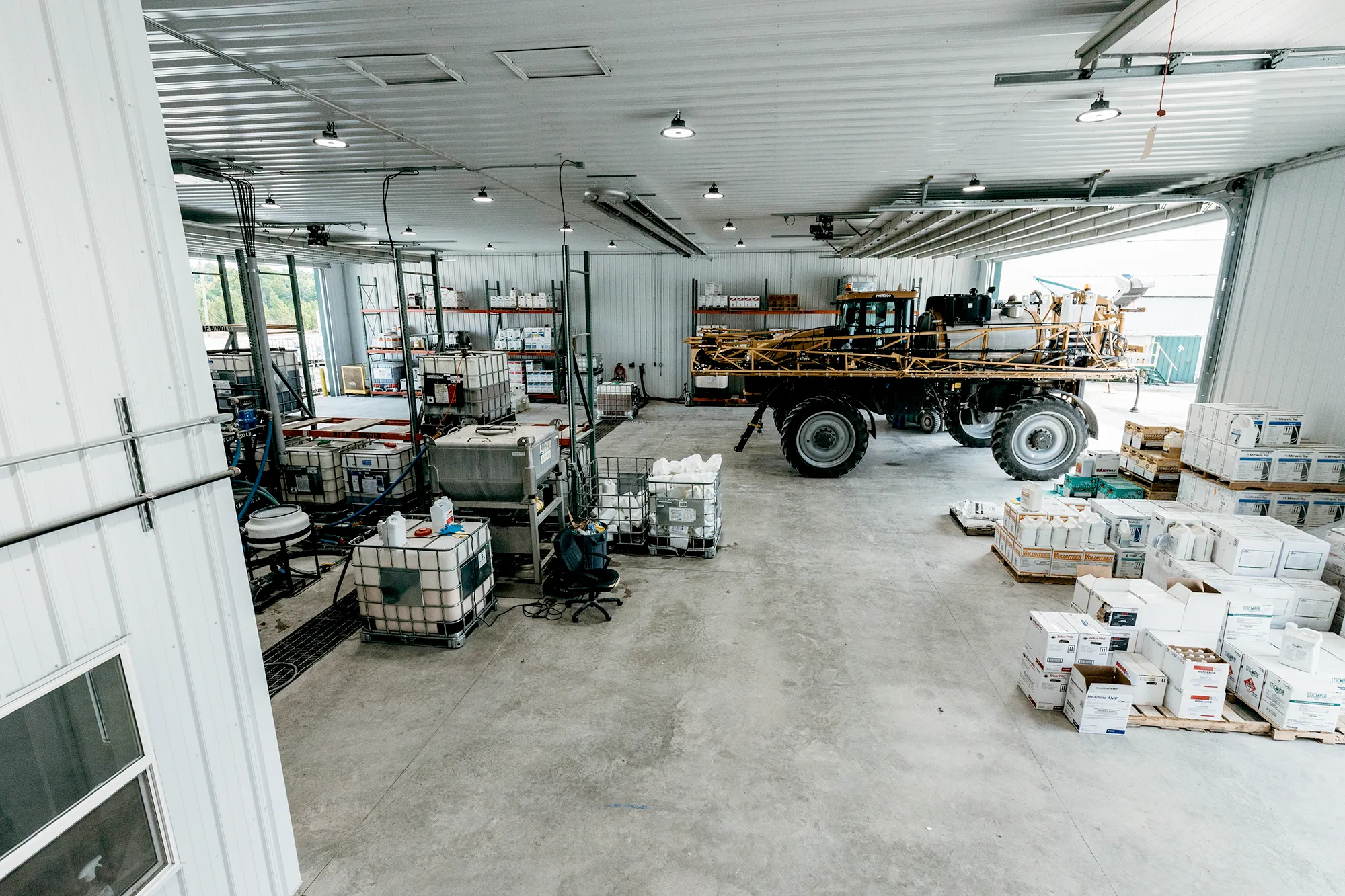
Permanent Post-Frame Fertilizer Storage Buildings
Permanent post-frame fertilizer storage buildings are engineered for high-volume, long-term use. Farmers who move a lot of fertilizer each season often pick this option for its durability, flexibility, and ability to keep fertilizer usable year after year.
Advantages
Durability
Concrete walls and Sturdi-Wall Plus brackets in conjunction with a footer-foundation resist fertilizer’s corrosive environment. By design, these buildings stand up to loaders, conveyors, and repeated traffic without walls bowing out or posts breaking down.
Moisture Control
Ventilation systems such as ridge vents and fans can be tailored to hold humidity in check. Insulated envelopes prevent condensation from forming on tanks and walls—a common source of contamination and clumping in lesser setups.
Operational Efficiency
Clear-span interiors give loaders and conveyors space to work. Wide doors and drive-through bays simplify bulk deliveries and loading. Custom builders can plan layouts for safe traffic flow and staging areas that save time during the busy season.
Flexibility for Growth
Permanent structures allow for expansion or reconfiguration as acres increase. Some farmers later repurpose them for machinery or crop storage, stretching their value across multiple decades of service.
Compliance-Ready
Custom post-frame buildings can be engineered to meet Indiana and Ohio fertilizer storage regulations from the start, avoiding costly retrofits later.
Considerations
Upfront Investment
A permanent fertilizer storage building costs more than a fabric option. But when you spread that cost over 20-30 years, the annual expense is often lower.
Longer Build Timeline
Site preparation, concrete work, and framing take time. Farmers planning to use the building in spring should expect a months-long schedule, not weeks.
Fabric-Covered Fertilizer Structures
Advantages
Lower Initial Cost
Fabric structures cost less to erect. They let farms cover fertilizer without the financial weight of concrete walls and a framed roof.
Fast Installation
Many fabric buildings go up in a matter of weeks. For operations facing a delivery deadline, speed can outweigh other considerations.
Airflow and Light
The translucent fabric allows natural light in and promotes airflow. That helps limit condensation and keeps the dry fertilizer more manageable.
Considerations
Shorter Service Life
Fabric doesn’t hold up as long as wood and concrete. Covers need replacement, and steel frames eventually wear down. Over 10–15 years, repair and replacement costs add up.
Weather Exposure
Heavy snow, strong winds, or accidental tears can shorten the structure’s life. Farmers in the Midwest often report cover damage after harsh winters.
Corrosion Still a Threat
Even under fabric, you still need a durable containment floor. Fertilizer dust and moisture will attack steel fasteners and framing just as aggressively as in other environments.
Compliance Challenges
In Indiana, the Office of Indiana State Chemist and Seed Commissioner (OISC) states that once you store more than 2,500 gallons in a single tank or 12 tons of dry, containment and pad requirements apply. According to the Ohio’s Department of Agriculture, in Ohio, more than 5,000 gallons of liquid stored for 30+ days requires engineered containment and API-rated tanks. Retrofitting a fabric setup to meet those standards can be costly.
Meyer Building’s Approach
Meyer Building helps farmers across northern Indiana and Ohio weigh these choices and plan facilities that balance cost with long-term durability. Our designs include:
- Materials that resist fertilizer’s corrosive effects
- Custom ventilation systems to control humidity and keep product flowing
- Clear spans and drive-through bays that improve traffic flow and save time at transfer
- Compliance and permitting, so you can focus on running your operation while we handle state requirements
We design and build for decades of service, so your facility is ready for today’s compliance standards and tomorrow’s growth.
Looking Beyond Initial Cost
When comparing fertilizer storage building vs fabric structure, think about the first five years versus the next twenty. Fabric will get you covered quickly and for less money up front, but the replacement cycle and weather risks add cost over time. A permanent building takes longer and costs more at the start, but it gives you lasting protection, efficiency, and compliance confidence that fabric simply can’t match.
Call (260) 565-3274 or contact us online to discuss which fertilizer storage option fits your farm’s needs.